Mortar is a mixture of lime, cement, water and sand. The strength of the mortar depends on the ratio of cement used. The most common types of mortar we use are N and S
Type N – common uses are walls. It’s softer and easier to work with. If you have a hard mortar between bricks then your bricks are more likely to crack, instead of the mortar. You typically see damage like this when the house settles or exepriences temperature changes. Type N is more pourous allowing moisture to escape. Water that cant escape will deteriorate bricks.
Type S – Has more cement in the mix making it much stronger. This is great for structural loads and resistant to water. Type S is commonly used in retaining walls or load bearing walls, where water will be frequent. Retaining walls still need good drainage though.
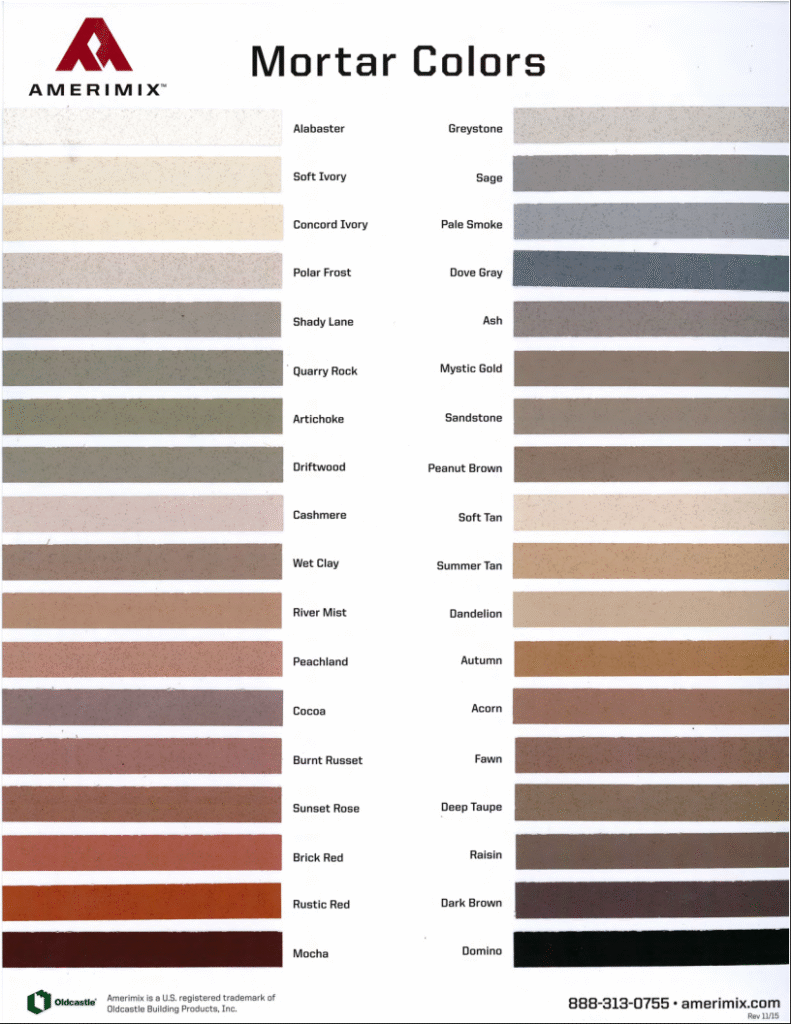
We purchase all of our mortar from Amerimix. This photo is to see the options only as we are not a dealer of Amerimix or affiliated with them in any way.
Tuckpointing and Repairs
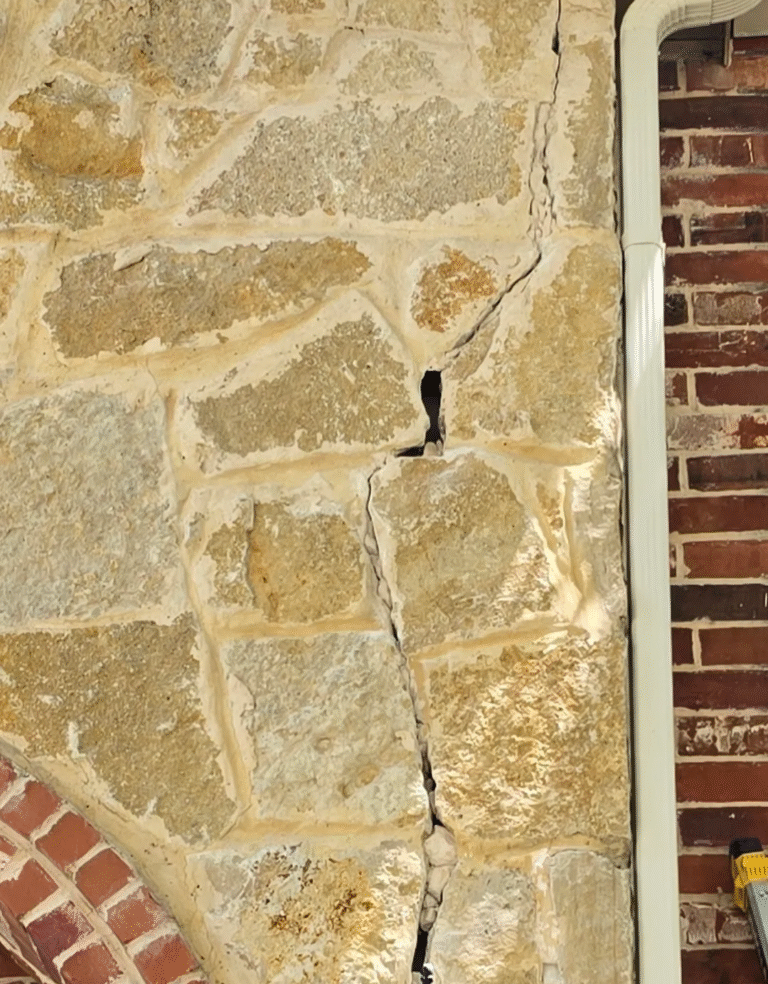
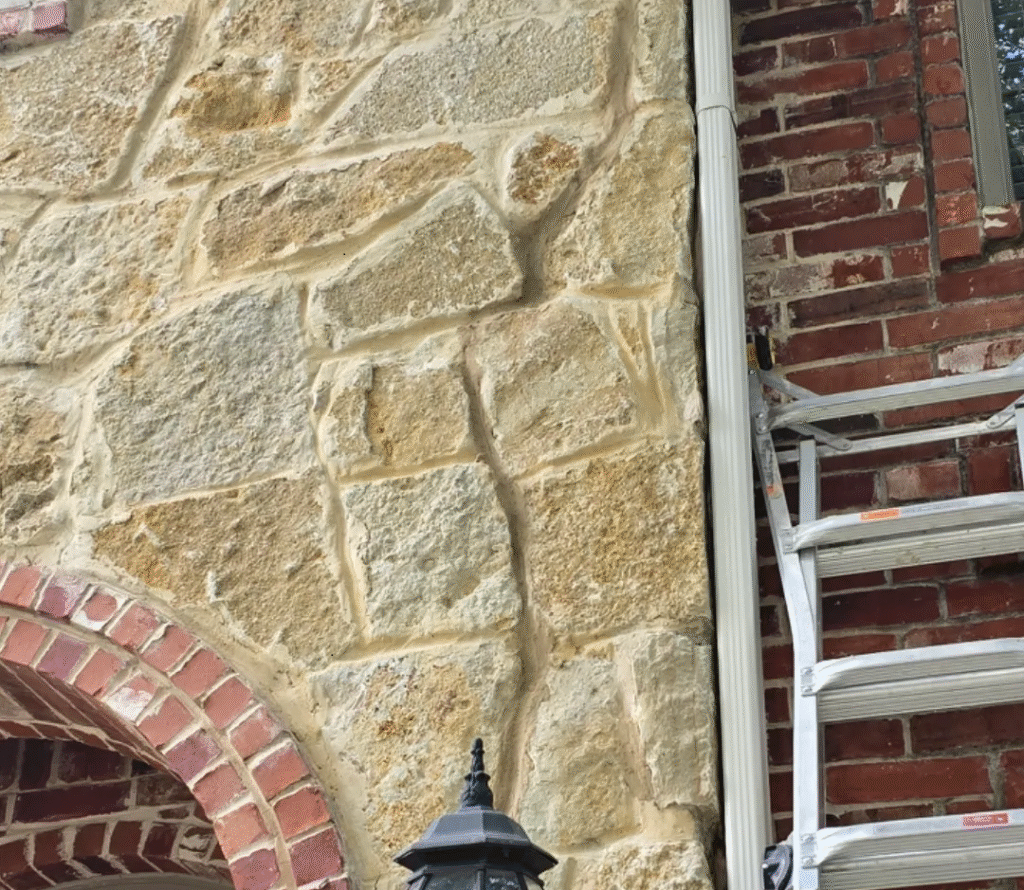
Tuck pointing is the process of removing weak or damaged mortar and replacing the joint with fresh mortar. The mortar between bricks or stones is referred to as a joint. Similar to removing a cavity, all the bad mortar needs to be extracted. If the brick or stone is totally loose, you will need to redo the work. In some cases this means a total rebuild.